Throughput is the new UX: designing ordering around kitchen capacity
The ordering screen gets the design attention, but the kitchen decides the experience. Capacity-aware ordering makes honest promises, paces demand by station, and treats quote accuracy as a core metric.
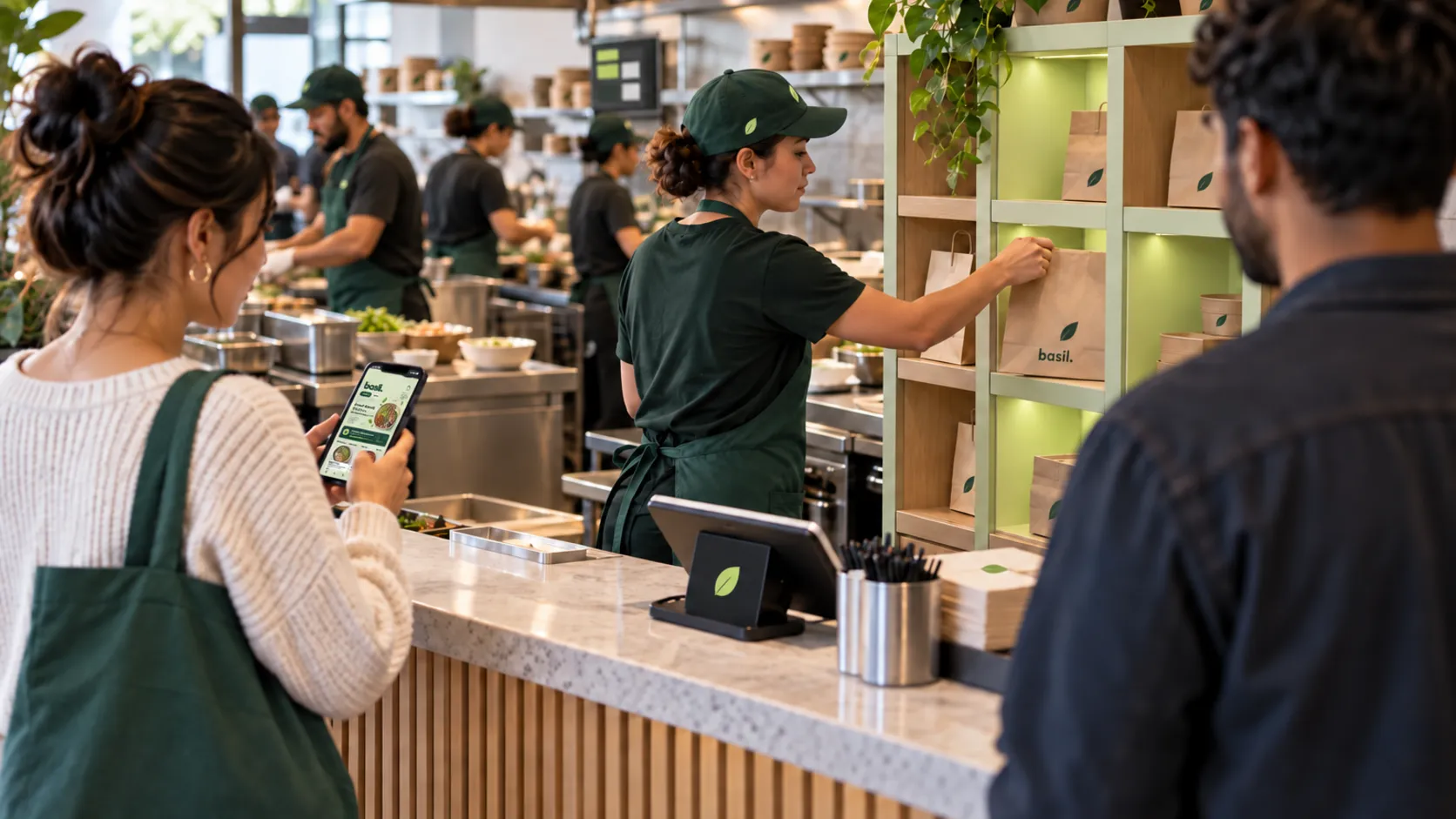
Most digital ordering work happens on the guest's screen. Teams test button placement, shorten checkout, and tune upsells. That work matters, but it optimizes the first few minutes of an experience that often lasts much longer. The rest is decided in the kitchen.
A guest who orders in four taps and then waits well past the quote does not remember the four taps. They remember standing at the pickup shelf. For multi-location brands, the next real gains in ordering experience come from designing the flow around kitchen capacity, not just around the interface.
The experience is decided in the kitchen
Every digital order is a promise: this food, at this time, in this condition. The storefront makes the promise. The kitchen keeps it or breaks it.
The problem is that most ordering flows make promises without looking at the kitchen. Quote times are static defaults set per location. Orders are accepted at any volume. Every menu item stays available no matter how backed up the fryer is. The storefront behaves as if capacity were infinite, and the line absorbs the difference.
Capacity-aware ordering flips that. The storefront knows roughly how loaded the kitchen is and shapes what it offers, when it offers it, and what it promises. That is a UX decision as much as an operations one, and digital and operations teams should own it together.
The promise is the product
Start with the quote time, the most visible capacity signal a guest ever sees.
A static quote is wrong most of the time. It is too long during slow periods, which costs conversion, and too short during peaks, which costs trust. An honest quote comes from real load: orders in the queue, what those orders contain, which stations they hit, and who is on the line right now.
A guest will forgive a long quote. They rarely forgive a short one that turns out to be wrong.
That asymmetry is why promise accuracy belongs next to sales and conversion in your core reporting, not buried in an ops report. Measure quoted time against actual ready time for every order, by location, channel, and daypart.
| Metric | What it tells you |
|---|---|
| Quote accuracy | Share of orders ready within an agreed window of the quote |
| Late tail | How late the worst orders run, not just the average |
| Early ready | Food sitting on the shelf and losing quality |
| Quote drift | How often the promise changes after the order is placed |
Averages hide the problem. A location can post a fine average and still have a long tail of very late orders every Friday dinner. The tail is what guests talk about.
Pace by station, not by store
Most throttling is a blunt store-level cap on orders per interval. It treats a kitchen as one resource when it is several. A rush of salads and a rush of fried chicken put very different loads on the line.
Throttle where the bottleneck is
Map each menu item to the stations it touches and a rough prep weight. Then pace by the constrained station. If the fryer is saturated, fryer-heavy orders get later times while orders that skip the fryer keep flowing.
This requires a menu model that knows about stations and prep, not just prices and modifiers, which is one more reason a canonical menu model pays off.
Treat pickup slots as a capacity tool
Scheduled pickup is usually designed as a convenience feature. It is more useful as a pacing tool. Slots should reflect real capacity per interval, fill according to the load each order adds, and close when a window is full. Offering the next realistic slot beats accepting an ASAP order the kitchen cannot meet.
Fire at the right moment
Accepting an order and starting it are different decisions. A catering order for noon should not hit the line mid-morning just because it was placed then. Good firing logic works back from the promised time, holds orders until they need to start, and batches similar items when that improves throughput without hurting quality. The goal is food that finishes close to pickup, not food that finishes early and waits.
Simplify the menu under load
Under load, complex items drive most of the delay: custom builds, long cook times, heavily modified orders.
A capacity-aware storefront can temporarily hide or deprioritize those items at peak load, then restore them when the queue clears. This is not an out-of-stock flag. The item is available, just not the right thing to sell right now.
A few rules keep this from feeling arbitrary:
- Set thresholds in advance. Decide which items pause at which load levels, per location, and write it down.
- Prefer reordering to removal. Moving simpler items up the menu often does most of the work before anything disappears.
- Stay consistent across channels. If an item pauses on your storefront but stays live on a marketplace, the kitchen still gets the order.
- Restore automatically. Manual toggles get forgotten, and the item stays hidden through the next slow period.
One kitchen, three surges
The hardest capacity problem is that demand arrives from several directions at once. A marketplace promotion, a first-party push notification, and a large catering order can land in the same half hour. Each channel sees only its own orders. The kitchen sees all of them.
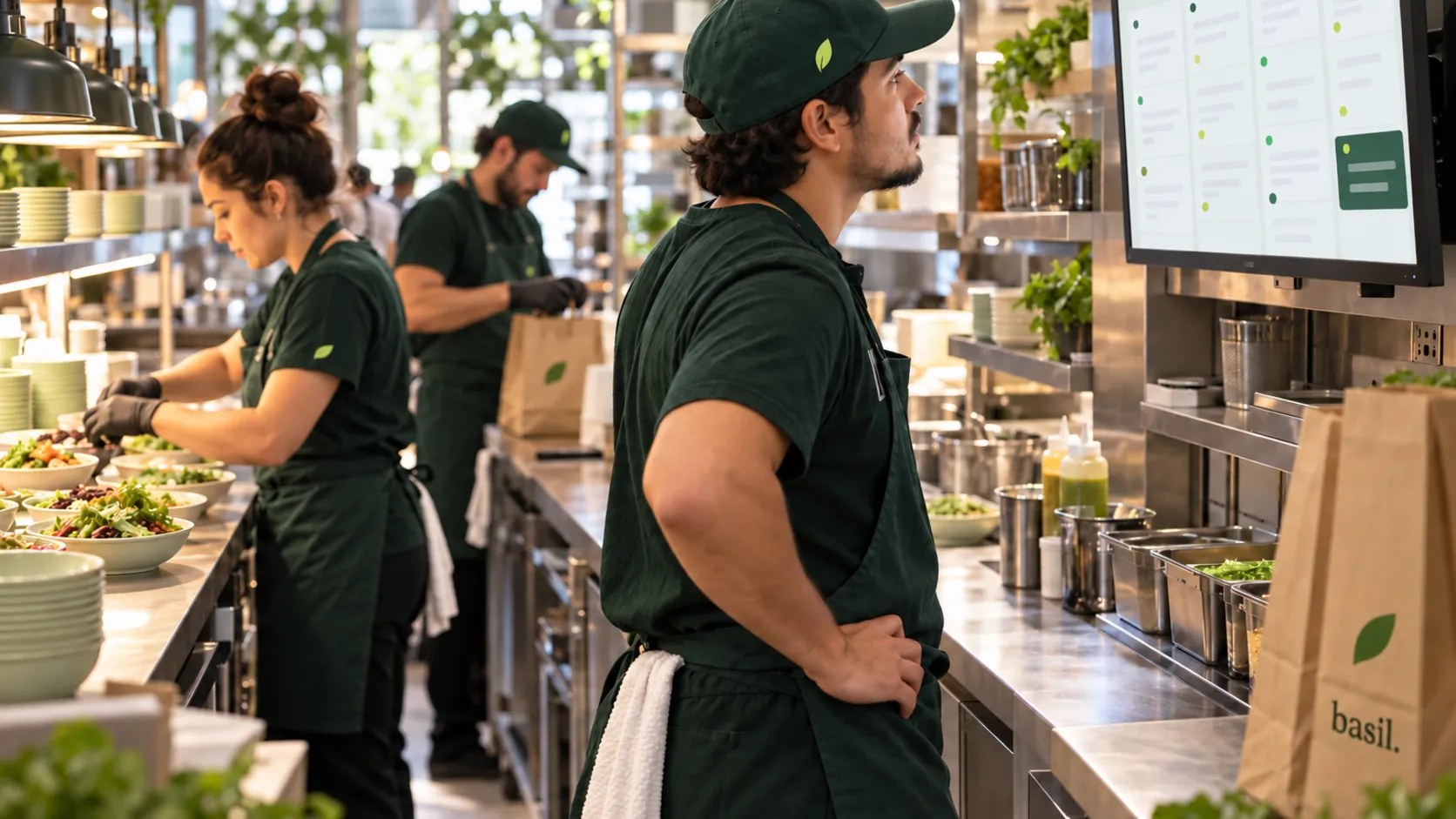
Capacity decisions have to be made on the combined queue. That means marketplace, first-party, and catering orders flowing into one view with consistent item mapping, so a pause or pacing rule applies everywhere at once. It also means deciding in advance which demand gets protected when capacity is tight. Many brands protect first-party guests and catering commitments first, since those are the relationships they own, and slow marketplace intake before the line breaks. That choice should follow the roles you give each channel, not whoever is loudest on a busy night.
Tell guests before they find out
Delays will still happen. The difference is whether the guest hears about it from you or discovers it at the counter. When an order is slipping past its quote, say so early, with a new time and a plain reason. A short, honest message before the original quote passes preserves more trust than any apology afterward. For delivery, the updated time has to reach the courier handoff too, not just the guest.
Where AI helps, and where rules win
Capacity is a good place for AI, but not everywhere. It earns its place in short-horizon forecasting. Predicting load over the next hour from recent orders, scheduled pickups, catering commitments, weather, and local events is a pattern problem, and models handle it well. The same forecasts can drive prep suggestions: how much to drop ahead of a rush, which station to reinforce, when to start par-cooking.
Rules are better for decisions that guests and staff need to trust and predict. Which items pause at which load. Which channel slows first. How far a quote can move after an order is placed. These should be explicit, reviewable, and the same every time. A model can recommend changing a threshold. It should not quietly invent one mid-rush.
The pattern that works is AI for the forecast and rules for the response. We go deeper on that split in where AI pays off in restaurant operations.
A practical first quarter
You do not need a full capacity system to start:
The takeaway
The ordering screen is where the promise gets made, but the kitchen is where it gets kept. Brands that design around throughput quote honestly, pace demand where the bottleneck actually is, simplify the menu under load, and hold themselves to promise accuracy as a core metric.
All of that starts with every channel's orders and menu speaking the same language. See how the Techtris API brings menus and orders from every provider into one interface, or book a demo and walk us through your busiest hour.