Stop choosing between marketplaces and first-party. Design a channel portfolio.
Marketplaces and first-party ordering do different jobs. Treat them as a portfolio with explicit roles, pricing rules, and data flows, and the "which one" debate goes away.
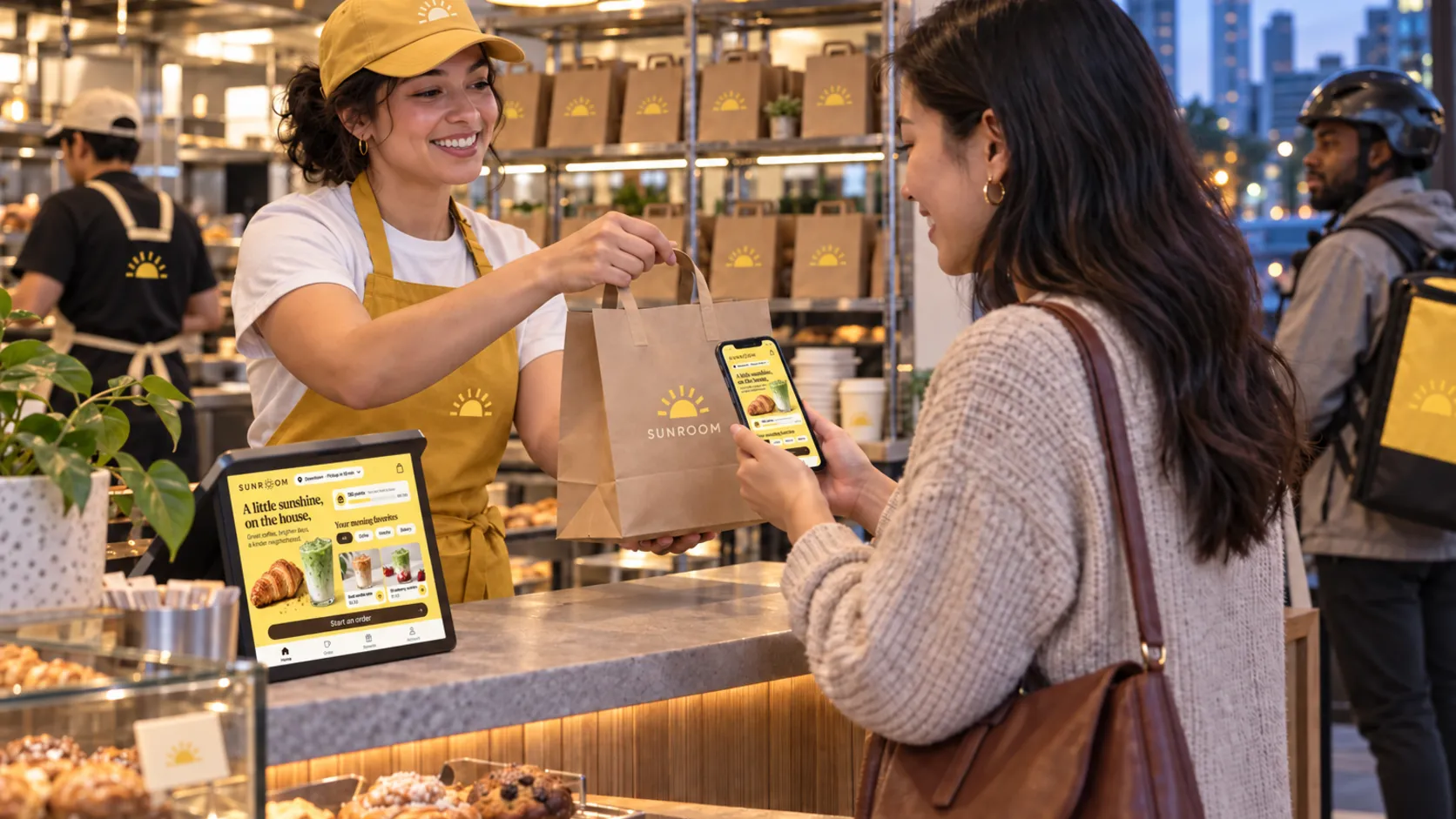
Most restaurant brands have had the same argument for years. One side wants to lean into marketplaces because that is where demand lives. The other wants to pull guests into first-party ordering because that is where margin and data live. Both sides are right, which is exactly why the argument never ends.
The better question is not which channel. It is what job does each channel do, and how do they work together? That is a portfolio question, and portfolios can be designed.
Each channel has a different job
A marketplace is a demand engine. It puts your brand in front of people who were not looking for you, at the exact moment they are hungry. That is valuable, and it is priced accordingly. You pay for reach, you accept the marketplace's rules, and you rarely own the relationship that follows.
First-party ordering is a relationship engine. The guest came to you. You know who they are, what they ordered, and when they are likely to come back. You control the experience, the upsell, the recovery when something goes wrong, and the price.
Once you name the jobs, the conflict starts to dissolve. You do not want your relationship engine to compete for discovery, and you do not want your demand engine to be the place your best guests live forever.
Define the roles before you set the prices
A channel portfolio starts with a short, explicit statement of roles. For most multi-location brands it looks something like this:
 Marketplaces acquire
Their job is to introduce new guests to the brand in new trade areas and new dayparts.
 First-party retains
Its job is to turn a second visit into a habit, and to be the best way to order for anyone who already knows you.
 Catering and group ordering expand
Their job is to grow average order size and reach new occasions, often with a different menu and lead time.
Write this down. It sounds obvious, but it changes decisions. Menu parity, pricing, promotions, and even packaging should all follow from the role, not from habit.
Pricing rules that follow the roles
Price parity across channels feels fair, but it quietly subsidizes the most expensive channel with the least expensive one. If a marketplace order costs you meaningfully more to fulfill than a first-party order, identical menu prices mean your most loyal guests are paying for someone else's acquisition.
A portfolio approach sets pricing rules per channel, and keeps them boring and predictable:
- Set a channel price policy, not ad hoc markups. Decide how marketplace pricing relates to your in-store and first-party menu, and apply it consistently through your menu system rather than editing prices by hand in each tablet.
- Make the first-party advantage visible. If ordering direct is better, say so clearly in the experience: better prices, exclusive items, or loyalty that only works there.
- Protect the menu's integrity. Modifiers, combos, and availability should be consistent in structure even when prices differ. Guests notice when an item exists in one channel and not the other for no obvious reason.
The practical requirement here is a single source of truth for your menu that can publish different price books to different channels. If every channel is edited separately, a pricing strategy becomes a spreadsheet project that never quite stays in sync.
Treat the handoff as a product
The most valuable moment in the portfolio is the handoff: the point where a guest who discovered you on a marketplace becomes a first-party guest. Most brands leave this to chance.
A handoff is a small product with its own design:
- A reason to switch. Something concrete, such as a first-order offer, an exclusive item, or loyalty points that start counting immediately.
- A low-friction path. A short link, a QR code on the bag, or a message on the receipt that lands on a storefront that already feels familiar.
- A first experience that earns the second. Fast, accurate, and clearly on-brand. If the first-party experience is worse than the marketplace one, the handoff fails no matter how good the offer is.
Measure it like a funnel: how many marketplace guests see the invitation, how many place a first-party order, and how many place a third.
Data flows are the real advantage
The quiet benefit of a portfolio is data. Each channel produces different signals, and together they tell you much more than any single one.
Marketplace data tells you where demand exists, which items travel well, and which dayparts respond to discovery. First-party data tells you who your regulars are, how often they return, and what makes them spend more. Catering data tells you about occasions you might not otherwise see.
To use it, the data has to land in one place with consistent definitions. That means orders from every channel mapped to the same menu items, the same locations, and the same time buckets. Without that, every comparison becomes an argument about whose numbers are right.
Where AI starts to help
Once the portfolio is structured, AI becomes genuinely useful rather than decorative:
- Channel-aware menu decisions. Models can flag items that perform well on marketplaces but poorly on first-party, or the reverse, and suggest where each belongs.
- Smarter handoff targeting. Instead of inviting every marketplace guest equally, you can focus on the orders that look like the start of a habit.
- Anomaly detection across channels. A sudden drop in one channel, a menu item marked unavailable in only one place, or a price mismatch can be caught in minutes instead of weeks.
None of this works on a messy foundation. AI multiplies the quality of the structure underneath it, which is why the portfolio design comes first.
A simple way to start
You do not need to redesign everything at once. A practical first quarter looks like this:
The takeaway
Marketplaces and first-party ordering are not rivals. They are two instruments with different jobs, and the brands that win treat them as a portfolio: clear roles, deliberate pricing, a designed handoff, and one shared view of the data.
If you want to see how a single menu, connected providers, and a branded storefront fit together, take a look at Techtris Play and the Techtris API, or book a demo and we will walk through your channel mix with you.