One platform, many brands: the operating model for restaurant portfolios
Running every concept on its own stack multiplies cost and slows every launch. A portfolio operating model shares the foundations, lets each brand look like itself, and makes governance explicit.
Most restaurant groups did not design their technology portfolio. They accumulated it. The founding concept got a POS, an ordering site, and an app. The second concept arrived through an acquisition with its own vendors. The virtual brand went live on whatever was fastest. Each decision made sense at the time.
The result is a group running several stacks that do roughly the same thing. Every brand pays separately for integrations, maintains its own menu setup, and waits in its own queue for changes. A fix shipped for one brand gets rebuilt for the next. A new concept starts from zero.
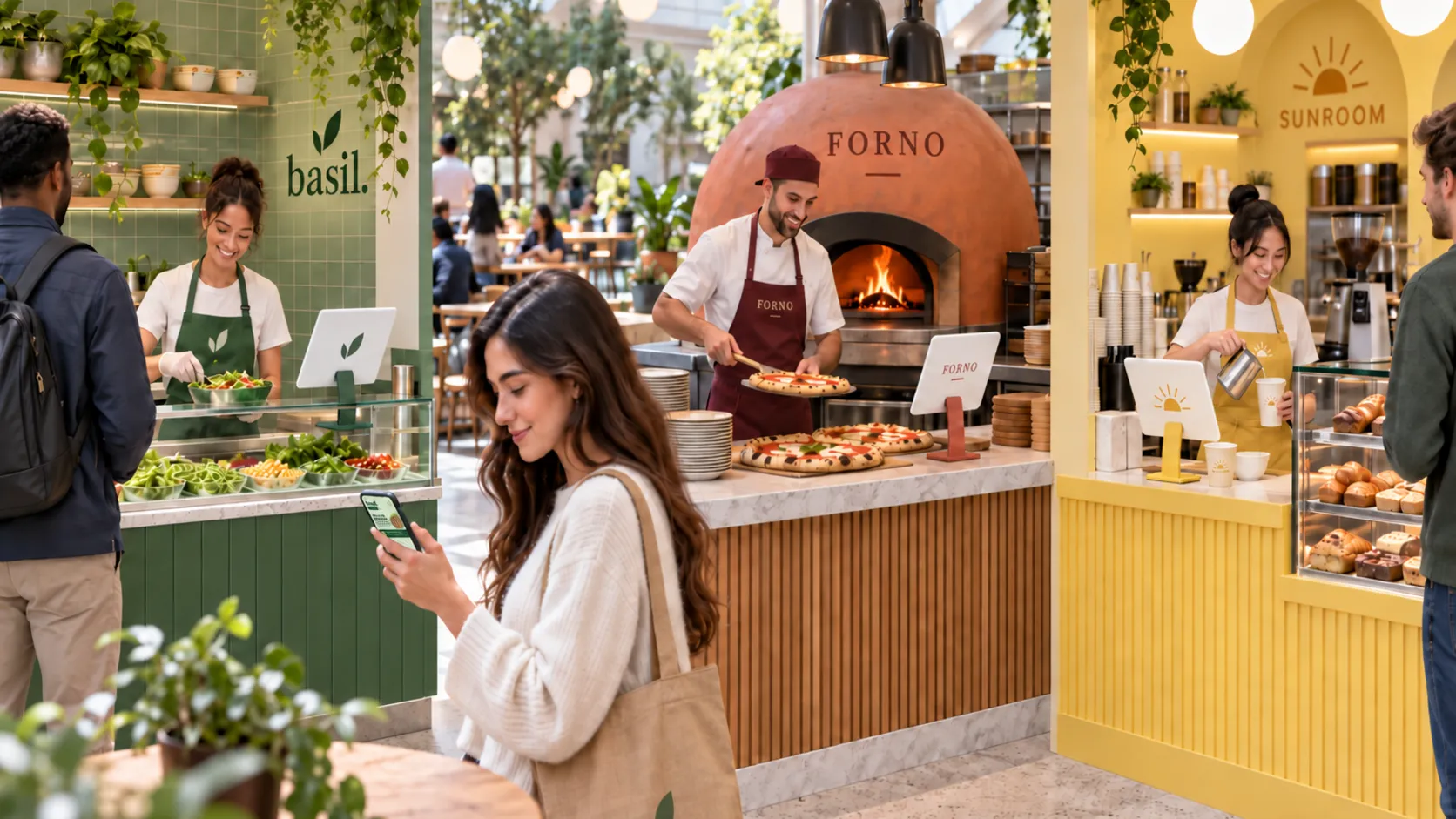
The alternative is not forcing every brand into one look. It is an operating model where the foundations are shared, the expression is local, and the rules about who changes what are written down.
Three layers, three owners
A portfolio platform works when everyone agrees on which decisions live at which layer.
| Layer | What lives here | Who owns it |
|---|---|---|
| Platform | Menu model, integrations, payments, order flow, data definitions | Central platform team |
| Brand | Design system tokens, content, voice, menu, promotions | Brand teams |
| Location | Hours, availability, prep times, prices within guardrails | Operators, within brand rules |
The point is not the exact split. It is that disagreements get settled once, in the design, not weekly in a ticket queue. When a request comes in, the first question is which layer it belongs to. That answer usually tells you who decides and how fast it can ship.
What belongs in the foundation
The shared foundation should hold the things that are expensive to build, painful to maintain, and invisible to guests when done well.
- One menu model. Every brand's menu, from a lean virtual concept to a complex full-service one, fits the same structure of items, modifiers, availability, and price books. Brands differ in content, not in schema. We make the full case in the canonical menu model.
- One integration layer. POS, order management, loyalty, and payment providers connected once, then configured per brand. If two brands run different POS systems, that is a configuration difference, not a second platform. This is where most of the integration tax gets paid down.
- Payments. Shared processing logic, with brand-level merchant configuration where the business requires it.
- Order flow and data definitions. An order means the same thing in every brand, so portfolio reporting is a query, not a reconciliation project.
- The guest identity decision. Not necessarily a shared identity, but one deliberate decision about it. More on that below.
The test is simple. If two brands would build the same thing twice and no guest would notice the difference, it belongs in the foundation.
Brand expression without forks
Shared foundations only work if each brand still feels like itself. A portfolio where every concept looks like a template has traded one problem for another.
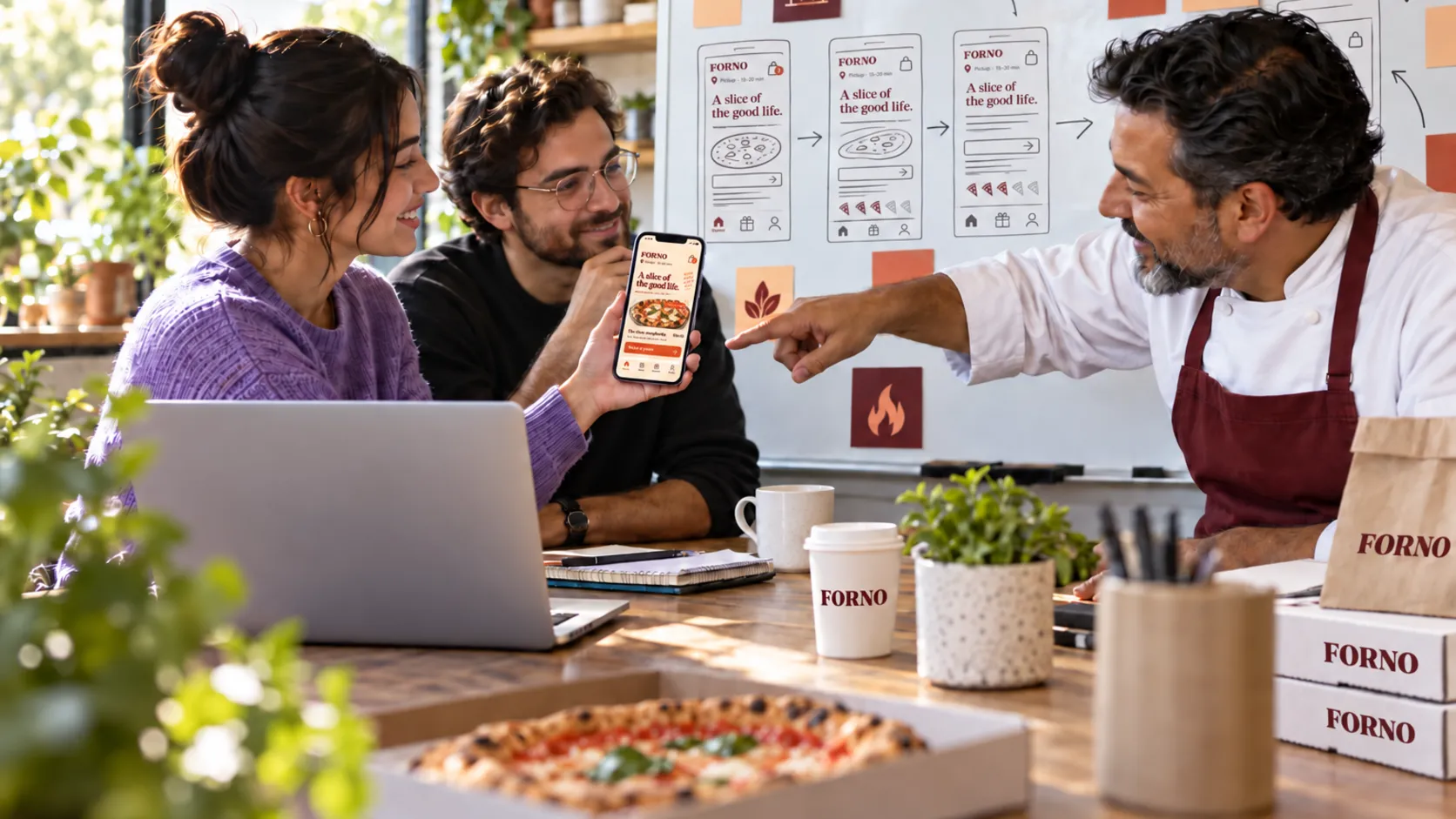
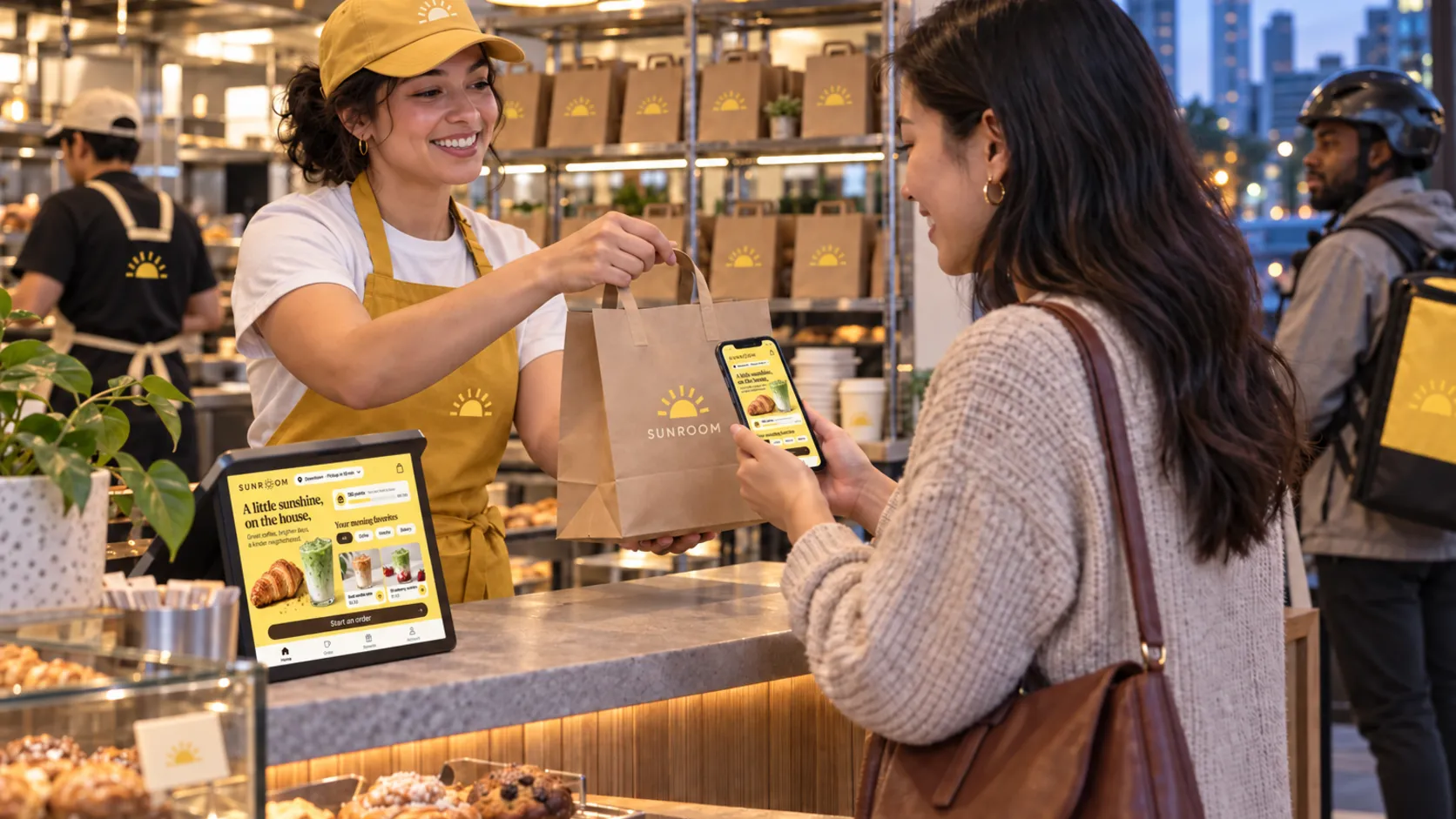
The answer is a design system built in layers. The platform provides components: menus, item pages, carts, checkout, account screens. Each brand provides tokens: typography, color, spacing, imagery, motion. The same checkout component can render as a quiet premium experience for one brand and a loud, playful one for another.
Shared components, brand overrides
Some brands need more than tokens. A pizza concept needs a builder. A catering brand needs group ordering and lead times. The rule that keeps this healthy: brands can extend or override a component, but they cannot fork it. An override is declared, reviewed, and sits on top of the shared version, so fixes to the base still flow through. A fork is a copy that drifts, and a year later you are back to separate stacks with extra steps.
Content and voice belong to the brand team entirely. Menu descriptions, photography, promotional copy, and push messages should be editable without an engineering ticket, inside the structure the platform provides.
Governance: who can change what
Governance sounds like bureaucracy until a location manager changes a price that breaks a marketplace sync, or a brand team edits a shared component and ships a bug to three other concepts.
Write down permissions by layer, and enforce them in the tools rather than in a policy document:
- Platform changes go through the central team, with review and staged rollout across brands.
- Brand changes belong to brand teams and ship on their own schedule, within the design system and menu model.
- Location changes are made by operators inside guardrails the brand sets: hours, item availability, prep times, and prices within an approved range.
Add an audit trail for every change, and a clear path for requests that fit no layer, so exceptions become design decisions instead of quiet workarounds.
Shared guest identity is a decision
Should a guest who orders from two of your brands have one account? There is no universal answer. The worst outcome is an accidental one.
The case for sharing
- Less friction. One login, with saved payment methods and addresses across brands.
- Portfolio insight. You see how guests move between concepts and which brands feed each other.
- Cross-brand rewards. Perks that work across the portfolio can recognize your best guests more fully.
The case against
- Brand separation. Some concepts are deliberately positioned apart. A guest may not expect their fast-casual habit to be linked to your premium brand.
- Consent and privacy. Shared identity means shared data obligations, and guests should understand what is linked and why.
- Loyalty economics. Cross-brand programs raise hard questions about who funds rewards and how value moves between brands.
A common middle path is a shared identity layer underneath with brand-level presentation on top: one account and one set of consents, with each brand deciding what it shows and how its loyalty works. Whatever you choose, decide it at the platform level, document it, and make it visible to guests. Changing it later is far harder than getting it right early.
Launching a new concept
The clearest test of a portfolio platform is how quickly a new concept goes live. On separate stacks, a launch is a project: vendors, integrations, a new site, a new app, new reporting. On a shared platform, it is mostly configuration and design.
When the foundation is shared, a new brand is a set of decisions, not a new stack.
A new concept, including a virtual brand running out of existing kitchens, should need only:
- A menu entered into the shared model and mapped to the right POS and locations.
- A brand token set and any declared component overrides.
- Content, photography, and voice.
- Location configuration: which kitchens, which hours, which channels.
- Identity and loyalty settings, inherited from the portfolio decision.
Payments, loyalty, and reporting are already there. That changes the economics of experimentation: testing a concept becomes cheap, and retiring one stops being a sunk-cost argument.
A practical rollout plan
Migrations fail when they try to move everything at once.
Set up the teams first
Stand up a small central platform team that owns the foundation, the shared components, and governance. Each brand keeps a digital lead who owns expression, content, and brand priorities. Operations names an owner for location configuration standards. The platform team serves the brands. It does not set their roadmaps.
Then move in phases
The takeaway
A restaurant portfolio does not need a stack per brand. It needs shared foundations, brand expression built on shared components, location control inside guardrails, and a deliberate answer on guest identity. Get those right and every new concept costs less to launch, while every improvement reaches every brand.
To see how each brand keeps its own identity on shared foundations, look at Techtris Play and Techtris Console, or book a demo and walk us through your portfolio.